

Learn To Photograph your own FamilyA Beginner Series Part 3
Part 3: Composition & Simple Set-Ups
Before we dive in, one quick thing.
This little series is not just for people with fancy cameras.
Everything I’m sharing here works just as well with your phone.
In fact, most of these tips have nothing to do with camera settings at all.
They’re about light, composition, and noticing small moments — and your phone is more than capable of capturing those beautifully.
So if all you have is your phone in your pocket, you’re already good to go.
If you’ve been following along, you already know the goal of this series:
Not perfect photos.
Not forced smiles.
Just real, beautiful moments of your family as they actually are.
In Part 1 we talked about light, and in Part 2 we talked about capturing natural expressions.
Now let’s talk about something that quietly makes a huge difference in photos:
COMPOSITION.
Don’t worry — this isn’t a photography class.
You don’t need to memorise rules or measure angles.
Think of composition as how you arrange the little pieces inside your frame so the photo feels calm, balanced, and beautiful.
And the good news? Most of it is incredibly simple.

1. Keep It Simple
The biggest mistake people make is too much going on in the frame. Kids. Toys. Laundry. Plastic cups. Random stuff that somehow multiplies the second you pick up a camera.
Suddenly your eye doesn't know where to look — and neither does the photo.
Before you shoot, ask yourself one question: what do I actually want to remember about this moment? Your child drawing? Your baby's curls? Your daughter reading in the morning light?
Then remove everything that distracts from that.
Sometimes that means moving one toy out of frame. Closing a cupboard door. Shifting your child slightly toward a cleaner background. Tiny adjustments. Huge difference.
Now — I'll say this once and then we'll move on: clutter can actually be beautiful when it's used intentionally. The lived-in chaos of a real home can tell a story that a perfectly clean frame never could. But that's a more advanced conversation that deserves its own section. For now, while you're still training your eye, simpler is almost always better. Get comfortable with clean frames first, then we'll talk about embracing the mess.
2. Let the Frame Breathe
One trick photographers use constantly is leaving space around the subject.
You don’t always need to fill the entire frame.
A child sitting on the couch with empty wall around them can feel calm and beautiful.
A little space gives the photo room to breathe.
This is also why shooting slightly wider often works better with kids — you capture the moment without cutting things off.

3. Use Simple Composition Tricks
You don’t need complicated rules, but a few easy ones help instantly.
The Rule of Thirds
Instead of placing your child directly in the center, try placing them slightly to one side.
Imagine the frame divided into thirds.
Put your subject on one of those lines and the photo often feels more natural and balanced.
Shoot Through Things
This is one of my favourite tricks.
Instead of standing directly in front of your child, try shooting through something:
• a doorway
• leaves
• toys in the foreground
• the edge of a couch
It adds depth and makes the photo feel more like you’re peeking into a moment.
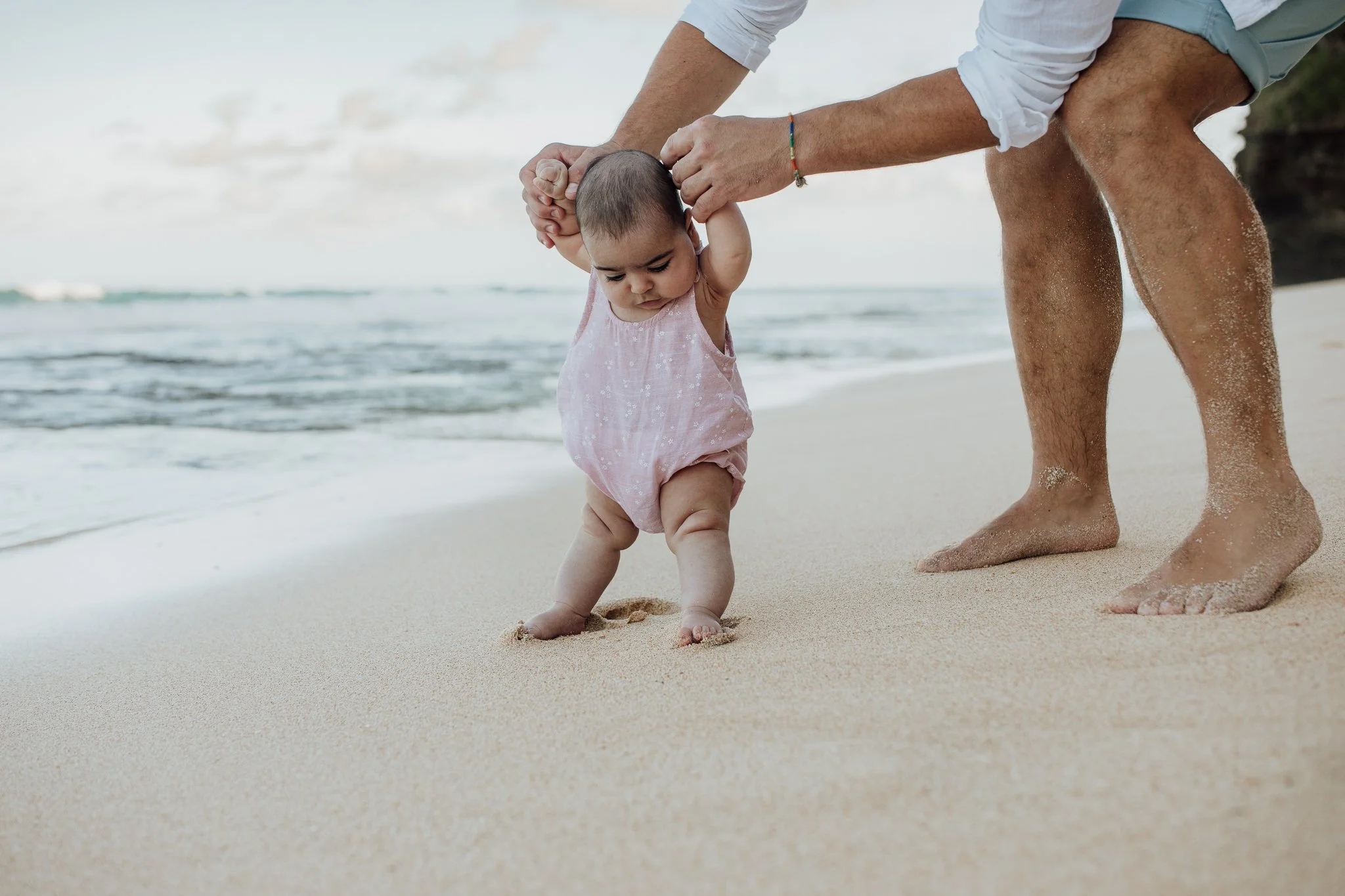
Change Your Height
Most photos of kids are taken from adult standing height.
Which means we’re always looking down.
Try this instead:
• sit on the floor
• lie on the ground
• shoot at their eye level
Suddenly the photo feels like their world, not ours.
4. Colour Matters More Than You Think
You don't need to colour-coordinate your entire family. But being a little intentional with colour can elevate a photo instantly. Here are a few easy ways to think about it.
Pick 2–3 Main Colours
If everything in the frame is a different colour, it feels chaotic — and not in the charming way. Try keeping the scene to around two or three colours. Warm neutrals and denim. Soft pastels. Earthy tones and cream. This doesn't mean matching outfits — just avoiding too many competing colours fighting for attention at once.
Use Colour to Guide the Eye
Our eyes are drawn to colour. So if the background is busy or colourful, your child can disappear into it. The easiest fix: calmer background, slightly brighter clothing. Let your subject be the most interesting thing in the frame.
Use a Colour Wheel — Seriously, It's a Game Changer
This sounds more technical than it is, I promise. A colour wheel shows you which colours naturally complement each other — and once you start using it, you'll wonder how you ever chose outfits without it.
The obvious combinations everyone knows: blue and orange, red and green. But the really beautiful ones are the less obvious pairings — the ones that feel intentional without feeling try-hard.
Some of my favourites:
Olive green and dusty pink — earthy, warm, timeless
Burnt orange and rust red — rich and moody, works beautifully at golden hour
Soft purple and mustard yellow — unexpected but stunning, especially outdoors
Sage green and terracotta — feels like a Sunday morning, every time
Navy and warm camel — classic, clean, always works
The easiest way to find combinations you love? Search "complementary colour palette " or "outfit colour palette" on Pinterest. You'll find hundreds of real examples styled by photographers — save the ones that feel like you and use them as a reference next time you're choosing what to wear. So much easier than trying to figure it out from scratch.

5. Create Tiny Set-Ups
When people hear “set-up” they imagine a full styled shoot.
But honestly, most of my favourite images come from very small adjustments.
Here are a few easy ones you can try.
The Window Seat
Place a chair, bed, or couch near a window.
Ask your child to:
• read a book
• draw
• cuddle a toy
Window light + a quiet activity = instant magic.
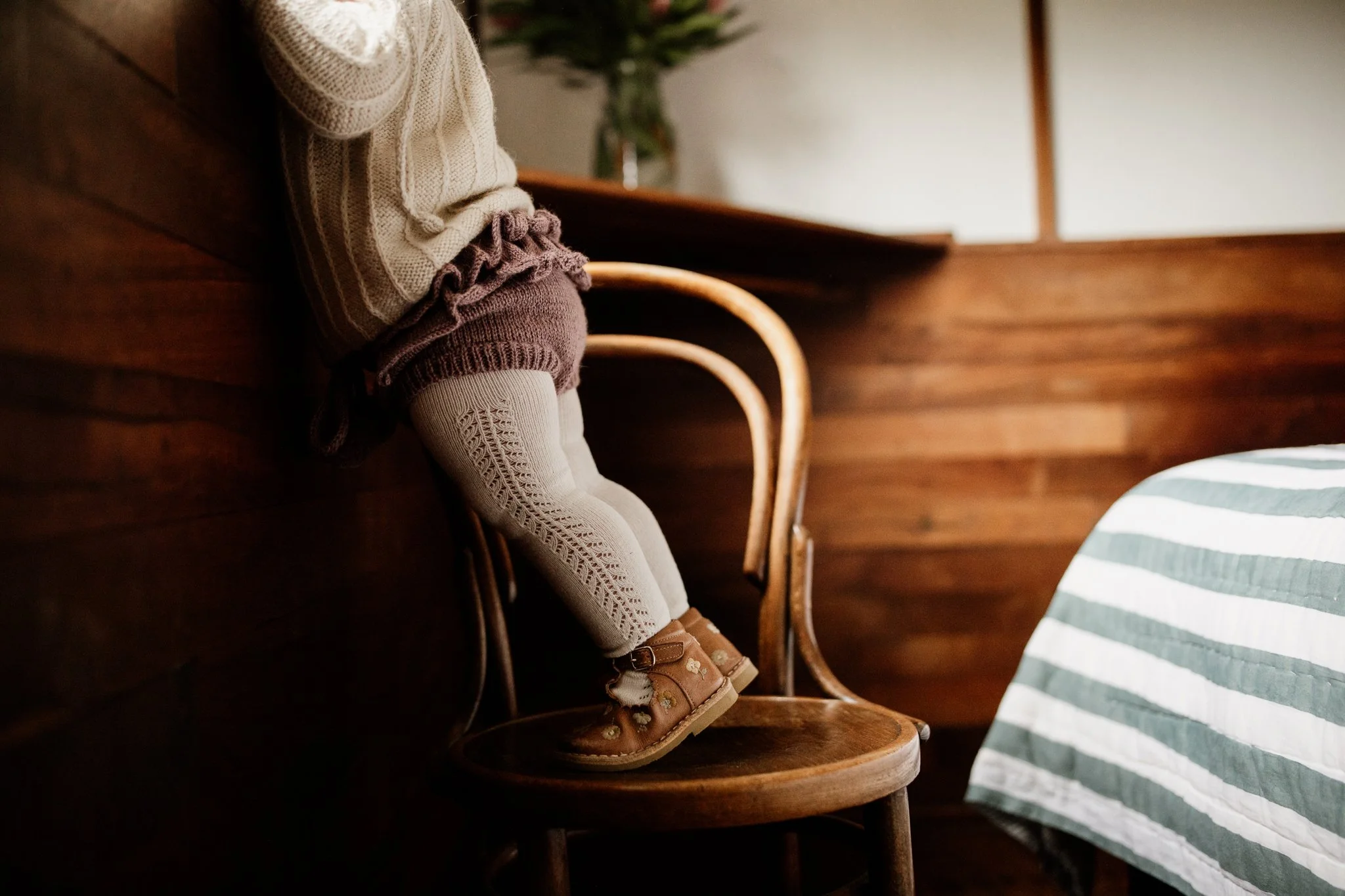
The Kitchen Stool
Kids love feeling involved.
Let them stand on a stool while:
• washing fruit
• stirring pancake batter
• licking the spoon
These moments photograph beautifully because they are naturally engaging.
The Bed Jump
Messy hair. Chaos. Giggles.
Let them jump on the bed.
You don’t need perfect composition here — just stand back and capture the movement.
These photos often become the ones families love the most.
6. Choose Props With Intention
Props should add to the story, not distract from it.
A good prop usually:
• means something to your child
• supports the activity
• fits naturally into the environment
Examples:
• favourite stuffed toy
• sketchbook and crayons
• a small chair
• blanket forts
• wooden toys
What you want to avoid is props that feel random or staged.
If it belongs in your family life, it belongs in the photo.
7. Don’t Force the Scene
This is important.
Sometimes the best thing you can do is set the scene… and then step back.
Let the moment unfold.
If the kids change the activity or move somewhere else, follow them.
The magic almost always happens after we stop trying to control it.

If you haven’t yet, make sure to read part one and two of this mini series. In Part 1 we talked about light, and in Part 2 we talked about capturing natural expressions.
Coming Next
In Part 4 we’ll talk about movement & embracing Imperfection - How to stop trying to make it perfect.